An Alpine hospitality collection in Val d’Hérens, preserving the living customs of Switzerland’s lost villages
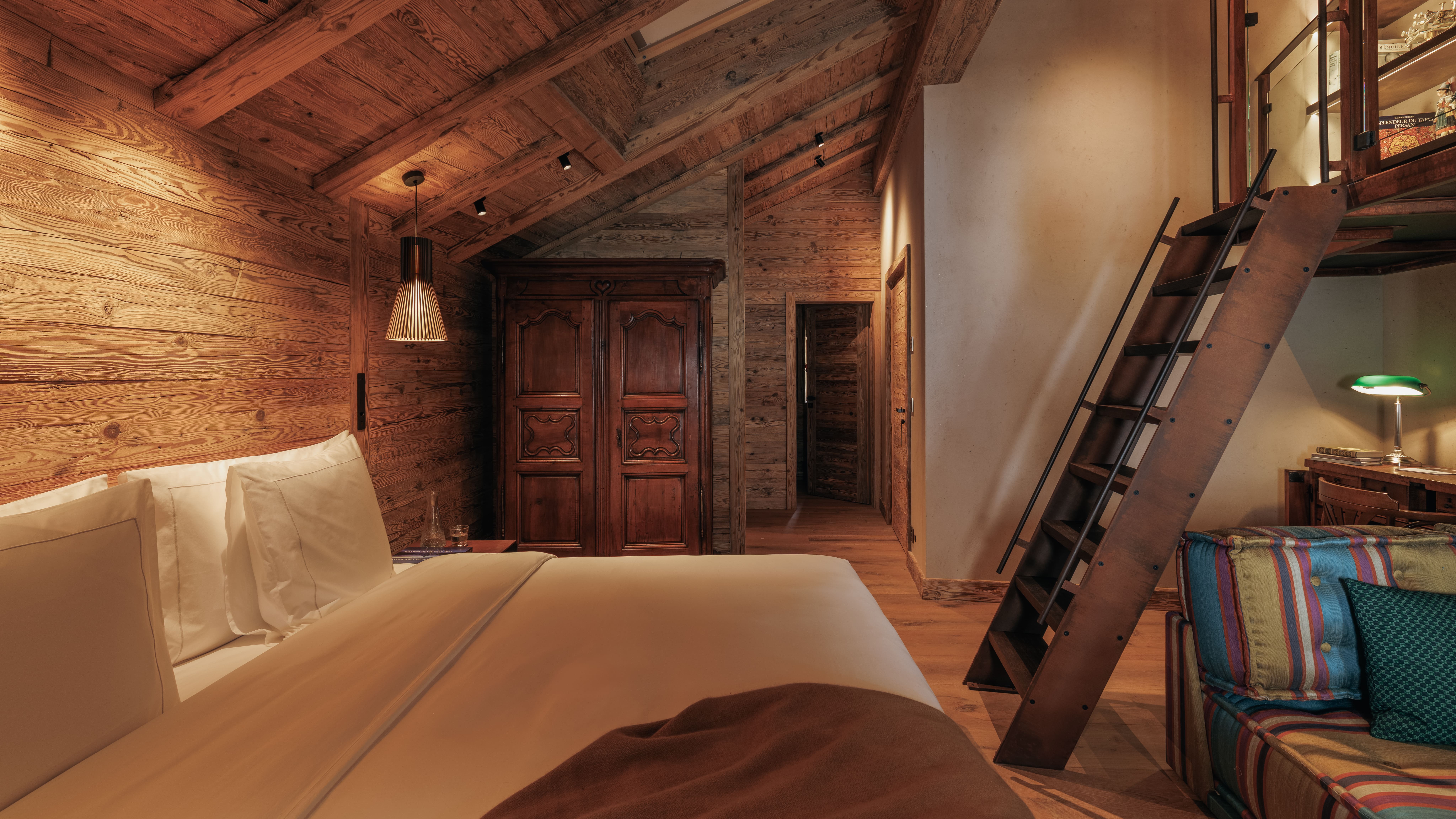
London, September 2026: BIRD has been appointed to represent Le Rucher d’Evolène as it opens the doors to a collection of restored century-old houses in Evolène, a hidden village in the Val d’Hérens region of the Swiss Alps.
What began with two chalets has grown into an evolving hospitality concept rooted in heritage, craft and mountain life. Under the helm of Steven Jacob, formerly of Zannier Hotels, Le Central, the project’s seven-key year-round hotel and village epicentre, welcomed guests for the first time on 21st August. It joins three private chalets already in operation, each hosting between four and six guests, and marks Le Rucher d’Evolene’s evolution into an albergo diffuso: an Italian concept of a decentralised hotel spread across a village.
“Le Rucher d’Evolène is defined by pure alpine living. It’s an unostentatious approach, lived through architecture, nature, well-being, local culture, guided experiences and acts of heritage conservation. I’ve spent my career in hotels that were built to impress. This one is built to belong. What draws me to Evolène is that nothing here is performed for guests, the design, the dialect, the way people still farm, gather and craft, all of it existed long before we arrived, and our job is simply not to get in its way.” – Steven Jacob, Director.
Living Heritage: The Preservation of What Exists
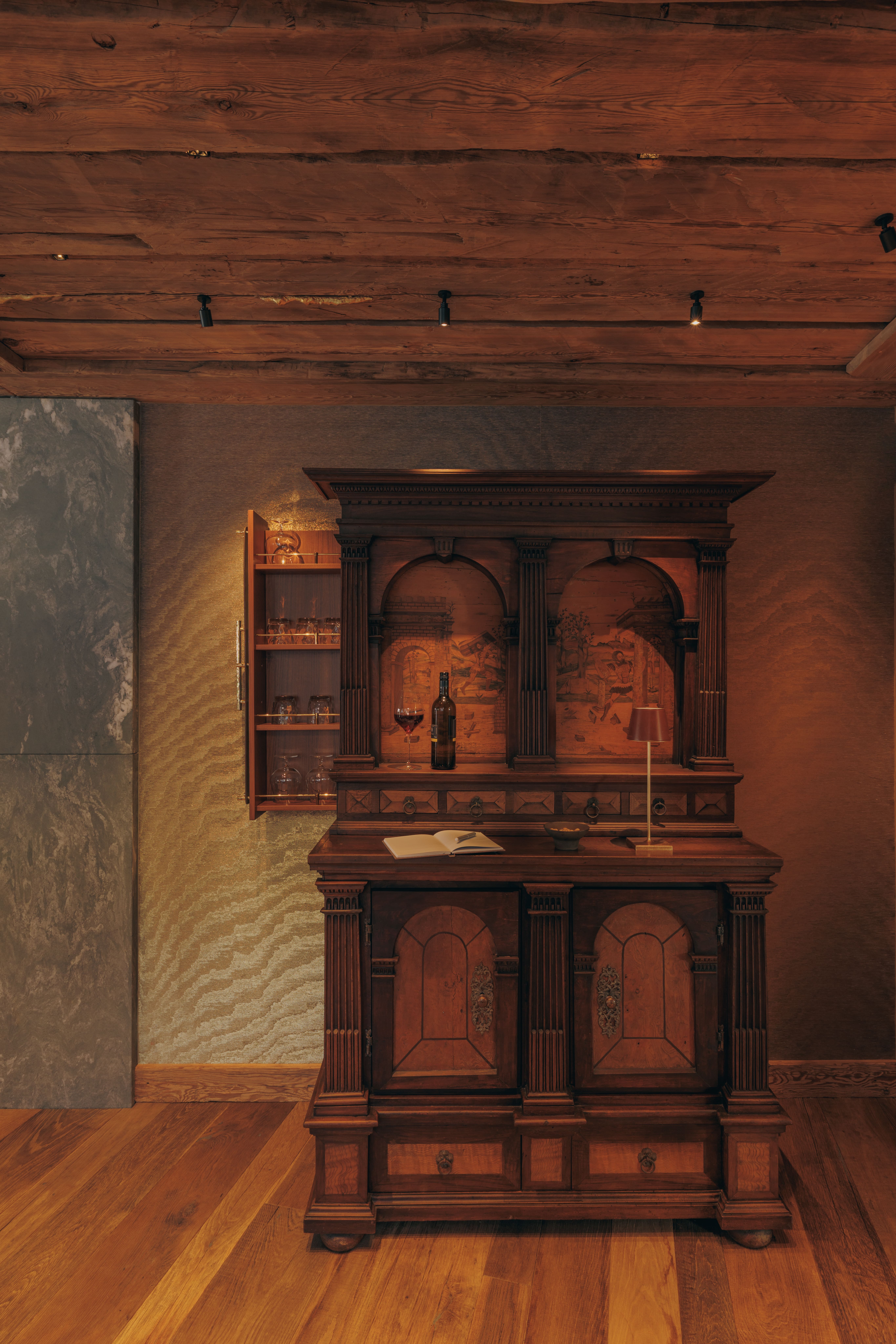
Dating back to the 1400s, the Walsers – mountain people from the high Alps – crossed the Swiss passes and settled in remote villages such as Evolène. Today, their homes, pied-à-terres and mountain raccards, once used to store dry cereals, hay and livestock, are being carefully brought back to life in a renovation that aims to preserve the craftsmanship, architecture and the existing heirloom objects, while adapting the spaces to contemporary hotel use.
The traces of those who lived there remain central to the design, from woodwork inscribed in the local Patois dialect to love letters discovered beneath floorboards. Restoration has been led by a team of local and international partners: architects Tamaris (Christine and Claude Faucher), Alps Architecture, Studio GDD, ran by Geraldine Dohogne, and Carole Roulier, taking helm on the gardens and landscaping, now also an integral member of the concierge team.
For Tamaris, the architects behind the chalets and hotel, it was the technical side of the project that convinced them to come onboard, with Claude being fascinated by the work of the wood, the inscriptions carved into the façades, the signatures left by anonymous craftsmen, and the motifs that reveal themselves only at certain hours of the day. “It is a spirituality of the beautiful”, he says.
Outdoor Energy: Evolène and The Val d’Hérens
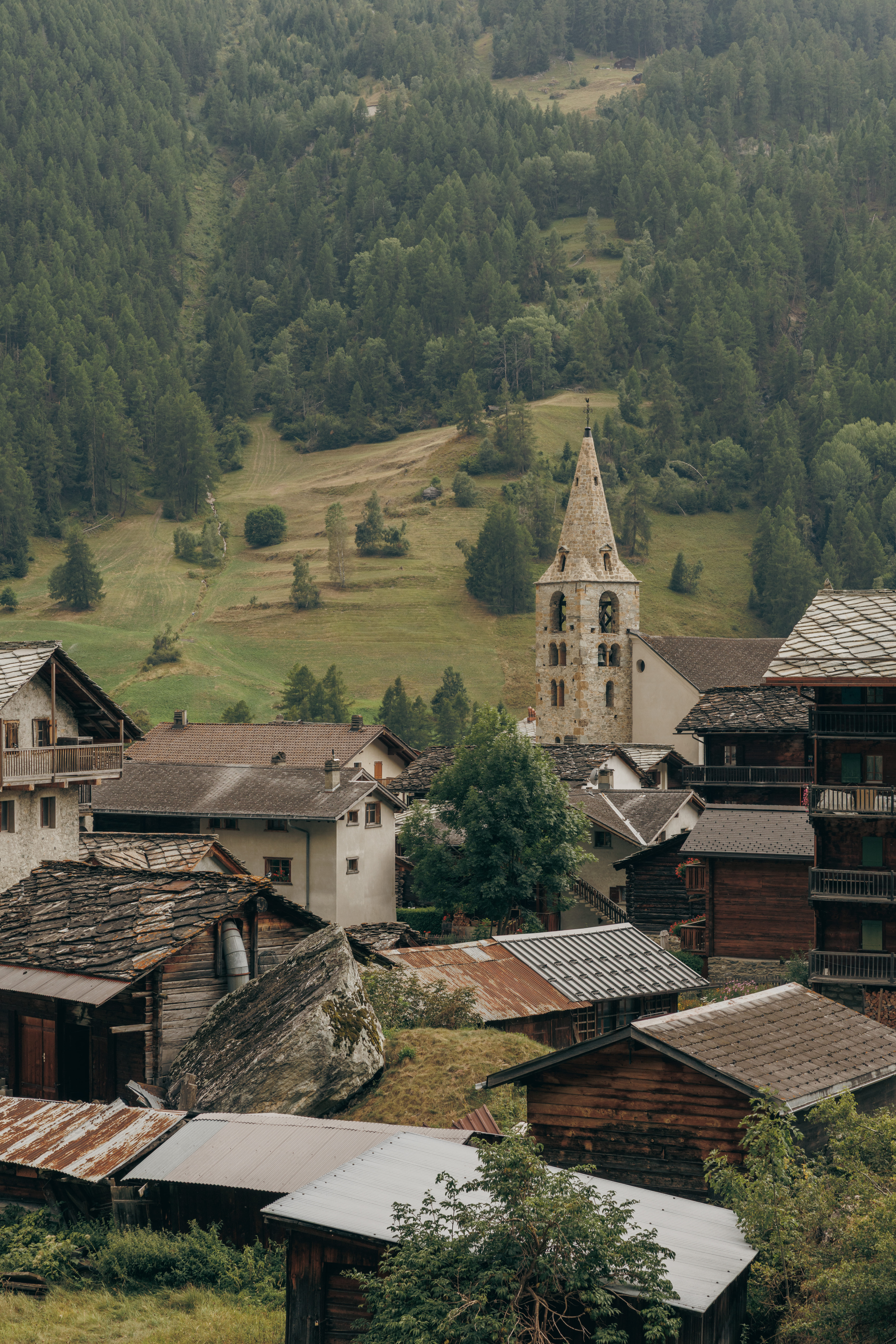
Home to just 800 residents, Evolène is dominated by the Dent Blanche, nicknamed the Queen of the Alps. The Ferpècle glacier is reachable on foot, while the wider Val d’Hérens is crossed by a network of bisses, the ancestral irrigation channels that run along the mountainsides.
Honouring its environment, Le Rucher d’Evolène will offer a considered programme of seasonal experiences designed to immerse guests in a mountain lifestyle shaped by nature, tradition and adventure.
In summer, these include paragliding above the high pastures, via ferrata routes across dramatic rock faces, horse riding through open valleys and guided hikes into the surrounding peaks. In winter, ski touring, ice climbing and nights spent in snow caves offer a more elemental return to the Alps. Year-round experiences include farm tours, birdwatching, stargazing, village cinema screenings, craft workshops at Atelier Métrailler and biathlon excursions.
These elements feed the journey offered to guests and are a reminder that the project is not just a property renovation: it is an integral part of preserving a village, a language and its know-how.
Deliberate Serenity: Calm as a Form of Wealth and Olëinna Spa
Le Central will act as the heart of the project. With a minimum stay of three nights, it is intended to allow enough time to return to the essential, find the calm of the Alps and truly inhabit the village.
Intimate common spaces are conceived as Alpine cocoons, shaped by natural materials, soft light and a quiet sense of warmth. Anchored by a central steel larch tree that extends through each floor, alongside beeswax and honeycomb motifs woven throughout, the space brings together subtle nods to Le Rucher’s literal translation, ‘the bee yard,’ and its alpine setting. From the terrace and gardens to the lounge and honesty bar, each corner has been designed to invite guests to slow down and settle into a simple rhythm.
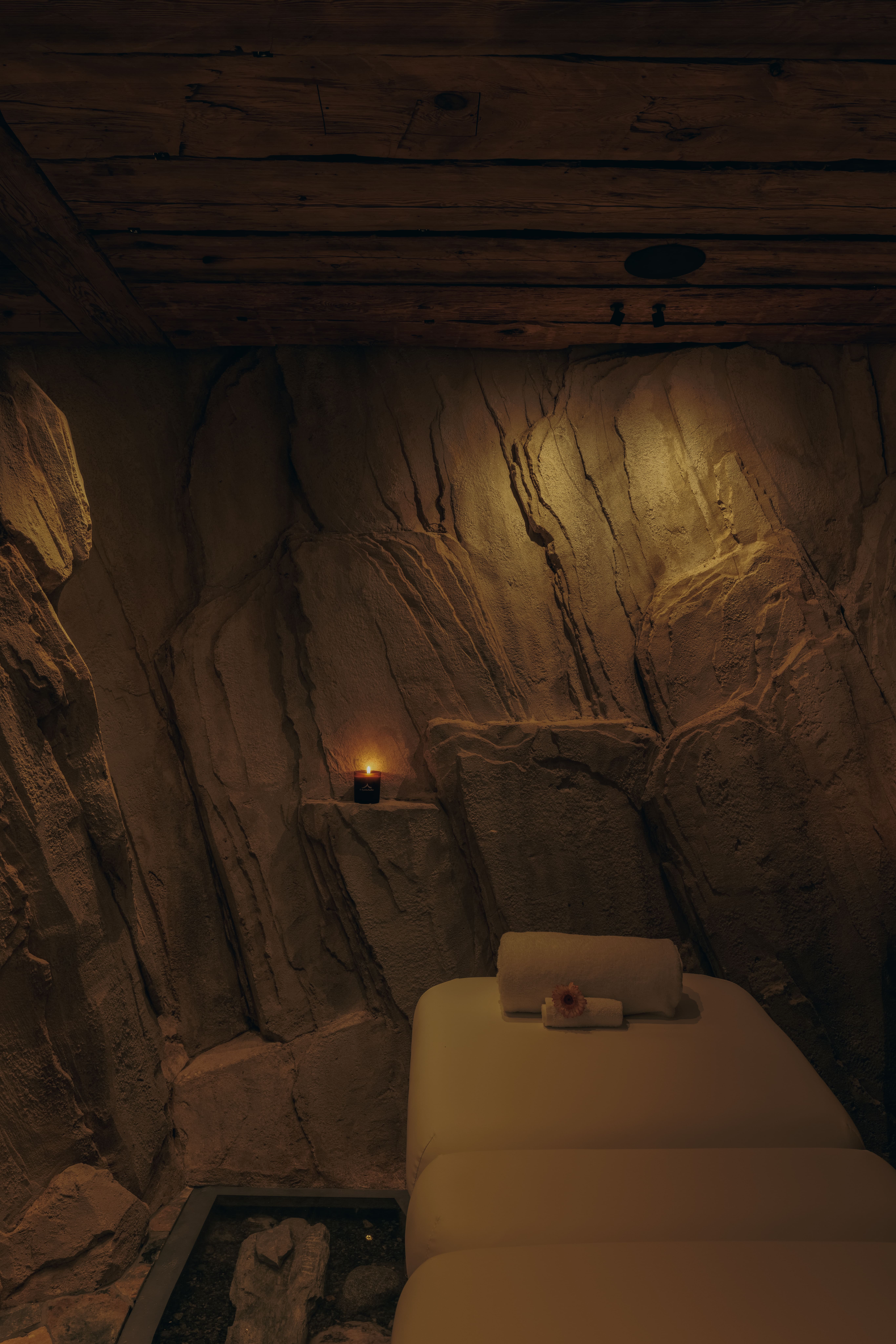
Evolène means “temperate waters” in Patois, a reference to the glacial source that feeds the village and so the hotel’s underground Olèïnna Spa draws on this heritage, offering signature treatments and massages in a setting reminiscent of mountain caves and limestone caverns.
A Growing Albergo Diffuso
Set within one of the few Swiss villages to have preserved its traditional architecture, patois and living customs, Le Rucher d’Evolène offers a stay shaped by restoration, local encounters and the elemental energy of the Alps.
It is a living project that will keep growing with each new opening. Following Le Central’s launch will be the addition of the fourth private chalet, Chez Odette, in March 2027 and La Pension, a dining destination open to villagers and guests alike and rooted in the produce of the valley, opening summer 2027.
Later that year, Le For de Blatt, a cultural space dedicated to events, performances and conferences, and a place where the memory of Evolène is told and passed on will open, and beneath that same building, the carnotzet will come to life as a cocktail bar, in a space with 15th-century beams, stone and old wood architecture. Next, Le Central’s in-house sports shop also beginning operation and continuing into 2028 Le Rucher d’Evolène’s second hotel will open with 25 rooms.
The vision is to give new life to historic buildings threatened with disappearance; to preserve a village, a language, traditions and rituals, and to offer an alternative to mass tourism. In the next 24 months, Evolène will become a distinguished Alpine address, and the pinnacle of how hospitality can meaningfully contribute to the preservation of lost villages across the mountains.